
Ubud travel guide
temples, rice terraces and things to do in Bali’s cultural heart
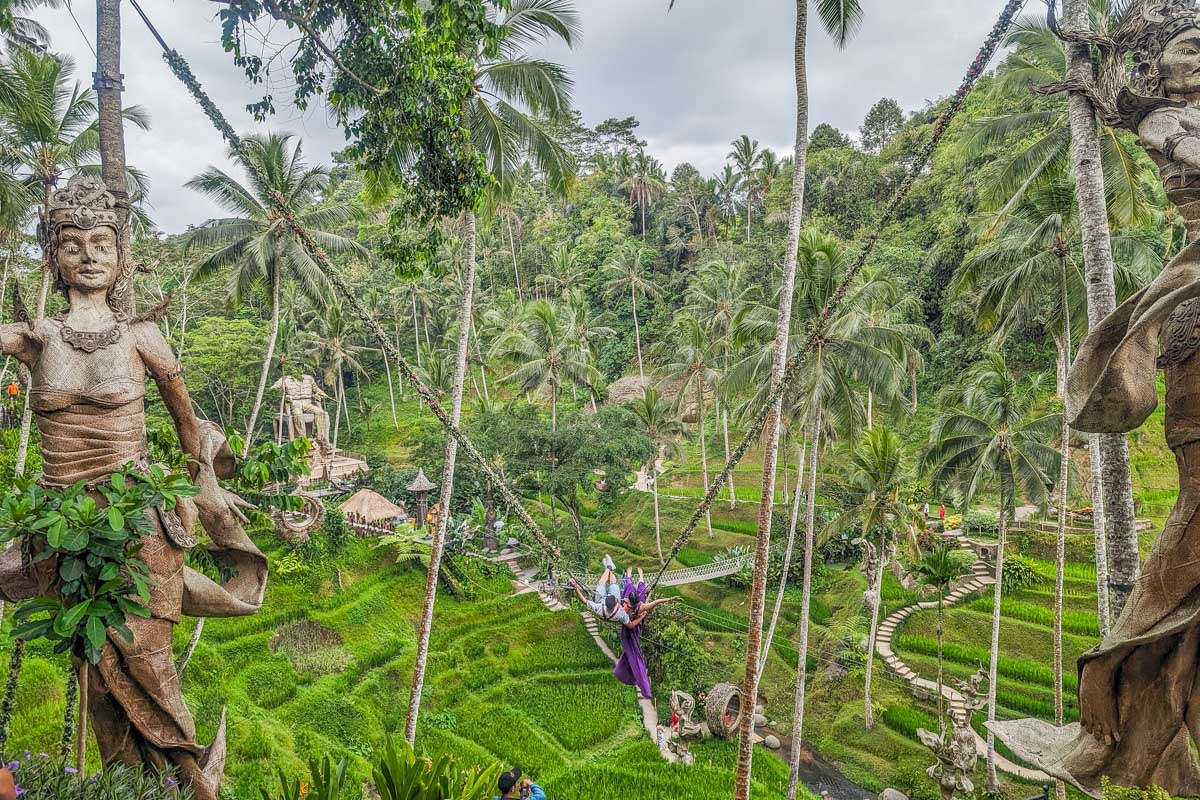
We live 45 minutes from Ubud. Here are the restaurants, routes, and places most travel guides never mention.
Ubud is where Bali shows its soul. While the rest of the island tempts you with beaches and sunsets, Ubud is about something else: rice terraces in the morning mist, temples and palaces, artists and craftspeople, yoga and some of Bali’s best food. Here’s everything you should see, do and know before you go.
Want my personal favourites instead, with the hotels, restaurants and places I’d choose myself? Read Vegard’s Ubud tips.
Want to experience Ubud with local guides and a ready-made plan?
See the packages with Ubud →
Why Ubud?

Ubud isn’t a beach town, and that’s exactly what makes it special. The town sits around 200 metres above sea level, in a green landscape of jungle, ravines and rivers. It’s a few degrees cooler than the coast, and the pace is slower.
This is where you’ll find Bali’s best museums, well-known art galleries, world-class spas and restaurants ranging from simple warungs to award-winning kitchens. Ubud draws artists, yogis, couples and anyone who wants more than sun and cocktails.
Recommended stay: at least three nights. People who only plan a day trip almost always regret it.
Temples and culture

Ubud Palace (Puri Saren Agung) is right in the centre and is still home to the royal family. In the evenings there are Legong and Kecak performances in the palace courtyard, one of Bali’s most authentic cultural experiences. Tickets cost around $10–12.
Saraswati Temple is instantly recognisable by its lotus pond and red architecture. Come early in the morning to avoid the crowds.
Goa Gajah (the Elephant Cave) is one of Bali’s oldest sanctuaries, around a thousand years old. The entrance is carved as a gaping demon’s face. Come when it opens at eight.
Tirta Empul is Bali’s best-known water temple, around 30 minutes north of Ubud. The Balinese purify themselves in the holy springs, and you can take part in the ritual yourself. Follow the dress code and take your shoes off.
Tip: all temples require a sarong and covered shoulders. You can borrow a sarong at the entrance, but you can also buy a nice one at the market and use it again.
Nature and rice terraces
Tegallalang is the famous picture of Ubud: stepped rice terraces north of the centre. It’s beautiful, but busy. Come at seven to beat the coaches.
Kajeng Rice Fields is a narrow path through working rice fields, ten minutes’ walk from the centre and almost free of tourists. In the morning the farmers are out working. Free.
Jatiluwih is the vast UNESCO-listed rice terraces, around 1.5 hours west of Ubud. Open terraces as far as the eye can see. Combine it with Batukaru Temple.
Campuhan Ridge Walk is a free half-hour walk along a ridge with jungle views. Best early in the morning.
| Place | Distance from Ubud | Crowds | Best time |
|---|---|---|---|
| Tegallalang | 12 km north | Busy | 07:00–08:30 |
| Kajeng | 10 min walk | Quiet | 06:30–09:00 |
| Jatiluwih | About 1.5 hours west | Moderate | All day |
| Campuhan Ridge Walk | In the centre | Moderate | Before 08:00 |
Activities

Rafting on the Ayung River is the most popular activity in the area. The river runs through dense jungle with waterfalls and reliefs carved into the rock face. The trip takes about two hours and suits most people.
Downhill bike tour from the volcano starts high up near Kintamani and rolls down through villages, coffee plantations and rice fields. Hardly any pedalling. One of the best half-day trips in Bali.
Sangeh Monkey Forest is the monkey forest we recommend. It’s 30–40 minutes from central Ubud, a sacred forest of tall trees with an old temple. It’s calmer, you can feed the monkeys, and they’re happy to climb on you without any trouble. Many people go to the Monkey Forest in central Ubud, but there have been quite a few problems there with aggressive monkeys biting, so we don’t recommend it.
Art museums and workshops. Neka Art Museum, ARMA and Museum Puri Lukisan give a good overview of Balinese art. Many galleries also run painting and woodcarving classes.
Mt. Batur at sunrise is the best-known trip from Ubud. You’re picked up in the middle of the night and stand on top of the volcano as the sun comes up.
Want to see the highlights in one day? We pick you up and drive you to the rice terraces, temples and waterfalls.
See the Ubud day trip →
Yoga and wellness
Ubud is one of the world’s best-known places for yoga and wellness. Since Elizabeth Gilbert wrote about the town in Eat Pray Love, the scene has grown enormously. Today you’ll find everything from drop-in classes to long retreats.
The Yoga Barn is the best-known centre, with many classes a day in different styles. A drop-in class costs around $15–20. Radiantly Alive is another good option.
Spas and massages are cheaper in Ubud than in Seminyak. An hour of Balinese massage costs around $10–20 at reputable places. Balinese massage is firmer than many expect, so speak up if the pressure is too hard.
Food in Ubud

Ubud has some of Bali’s best food, from local warungs to world-class restaurants.
| Type | Examples | Price level |
|---|---|---|
| Local warung | Babi guling (spit-roast pork), nasi campur | $3–8 |
| Vegetarian and vegan | Alchemy, Clear Café | $8–18 |
| Fine dining | Locavore NXT, Room4Dessert | $40–90 |
| Breakfast and coffee | Seniman Coffee, Bali Buda | $6–14 |
The restaurants I keep going back to are in Vegard’s Ubud tips. If you’d like to cook yourself, the cooking class with a local chef is a great choice.
Where to stay in Ubud
Central Ubud suits you if you want to walk to restaurants, the market and the palace. It can be busy and noisy during the day.
Penestanan and Sayan are ten minutes from the centre, with views over the jungle and the Ayung River. Quieter, with many of the finest villas.
Tegallalang and Keliki are further north among the rice terraces. Completely peaceful, but you’ll need a driver to get around.
The specific villas I recommend are in Vegard’s Ubud tips, and a comparison with the rest of the island is in where to stay in Bali.
Ubud practicalities
| Topic | Info |
|---|---|
| From the airport | About 1.5–2 hours by car, depending on traffic |
| Transport | Grab works, but not everywhere. A private driver or a scooter is easiest |
| Money | ATMs in the centre. Carry cash (IDR) for markets and warungs |
| Climate | 24–29 °C, cooler than the coast. Bring an extra layer for the evening |
| Best time | April–October. In the rainy season Ubud is at its greenest, but it rains more than in the south. See the best time to travel to Bali |
| The market | Ubud Art Market opens early. Always haggle, the first price is too high |
Our recommendation
Ubud deserves at least three nights. Spend the first day on temples and the market, the second on nature and an activity like rafting or a bike tour, and the third on yoga, the spa and the food. Combine Ubud with a few days by the sea, for example in Uluwatu or on a neighbouring island.
We lived in Bali for four years and put your trip with Ubud together the way we’d do it ourselves.
See the packages → Get a free trip proposal →
"Great service from A to Z! Really easy to communicate with and get information about when and what! Makes the trip easy so we can just enjoy Bali to the fullest."
Sandra EekGoogle review · ★★★★★